Resources
Code Repositories
- Wikidata notebooks and scripts – SPARQL queries and Python visualizations for Black artists in Philadelphia
- Project website source – This Hugo site
LEADING Fellows Data and Code
All code, data, and research notes from the fellowship are available for download:
- Shiny app source code
- Research notes (HTML) | RMarkdown source
- Datasets (CSV, GeoJSON, XLSX)
- Wikidata query exports (XLSX)
Scholars Studio Blog Posts
The following posts were published on the Temple University Scholars Studio blog as part of the project’s first year of work:
Designing a Wikidata Project: Mapping Black Philly Art
Curious about Wikidata but not sure where to start? In this beginner-friendly blog post, Dr. Synatra Smith explains how to get started with a Wikidata project. Beginning with a brief explanation of Wikidata, she outlines four stages of designing a project: Define the objective and scope, Identify data sources, Research and blogging, and Seek opportunities for collaboration. With lots of links to helpful external sources, this is a great place to start!
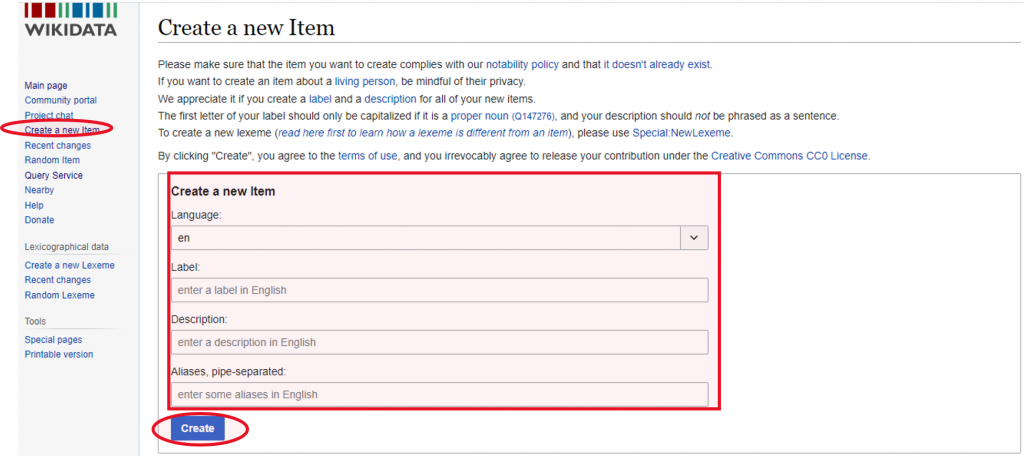
Editing in the World of Wikidata: What Does It Mean?
In this blog post, LEADING Fellow Dr. Rebecca Y. Bayeck explains the basics of editing Wikidata. She provides a step by step guide to help a new user from account creation to understanding the difference between statements and properties. She also explains how to use Openrefine, an open source application, to edit Wikidata quickly.
Querying Wikidata with SPARQL
Visualizing Wikidata: Using Python to Analyze Identity and Representation
About This Site
This website was produced through the LEADING Fellowship, a data science fellowship program run by the Metadata Research Center at Drexel University in partnership with the Philadelphia Museum of Art and Temple University Libraries.
The project spanned two years of fellows. In the first year (2021–2022), fellows contributed blog posts on Wikidata editing, SPARQL querying, and Python visualization, published on the Temple University Scholars Studio blog. In the second year (2022–2023), fellows Pelle Tracey and Eiman Ahmed built this website and created the tutorials and analyses hosted here, including work on Wikidata batch editing with OpenRefine and an R Shiny app exploring the relationship between mural density and housing values in Philadelphia.
The tutorials on this site – covering Wikidata, SPARQL, Python visualization, murals and housing values, and building a Hugo site – were written by the fellows as part of the program. The fellowship also included a five-week curriculum covering Wikidata, SPARQL, Python, GitHub, and web development with Hugo.